
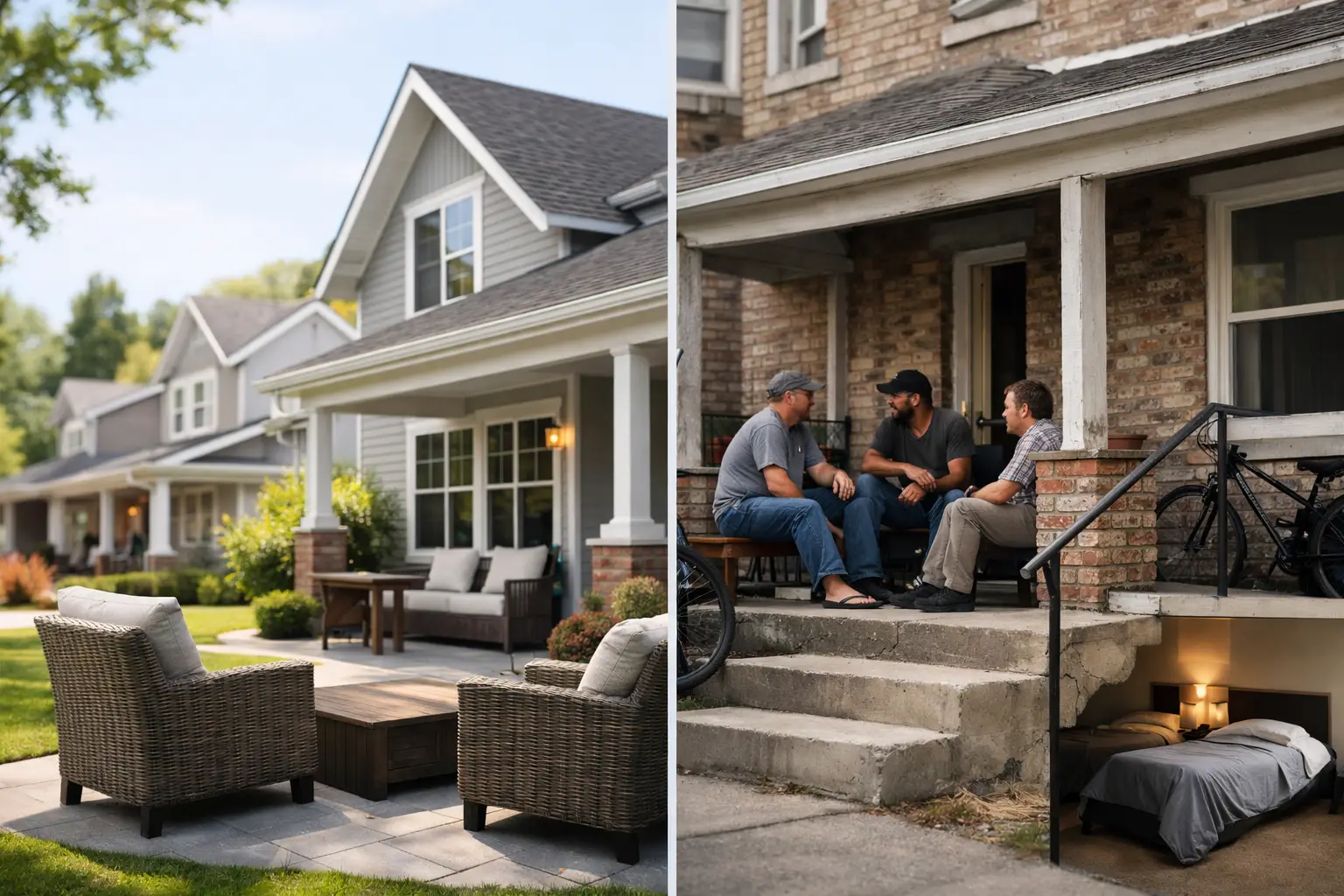
A person may be ready to leave detox or residential treatment without being ready to return to the same pressures, relationships, and routines that supported substance use. That gap is where the question of transitional housing vs halfway house often comes up. The terms are sometimes used interchangeably, but the right setting can make a meaningful difference in a person’s safety, accountability, and ability to sustain recovery.
Neither option is automatically better. The appropriate choice depends on where someone is in the recovery process, whether they need clinical treatment, and how much structure they need to remain stable.
Transitional Housing vs Halfway House Differences
Transitional housing is a broad term for supportive, temporary housing that helps people move from a highly structured setting toward greater independence. In addiction recovery, it often gives residents a sober, stable place to live while they build daily routines, work, attend outpatient care, reconnect with family, and practice relapse-prevention skills.
A halfway house traditionally refers to a more formal reentry setting. Some halfway houses serve people leaving correctional facilities, while others serve individuals stepping down from addiction treatment. They may receive government funding, work with probation or court systems, or have specific eligibility requirements connected to a person’s legal status. However, the meaning varies widely by state and provider.
The labels alone do not tell the whole story. Some programs called halfway houses provide recovery-focused support, while some transitional housing programs operate much like sober living homes. Others may offer little more than a bed and basic rules. Families should look beyond the name and ask what services, supervision, and accountability are actually in place.
The Level of Care Is the Biggest Difference
The most important question is not whether a program uses the term transitional housing or halfway house. It is whether it provides the level of care a person needs right now.
Residential addiction treatment is designed for people who need intensive support. It can include 24/7 supervision, individual and group therapy, medication support when appropriate, treatment for co-occurring mental health conditions, structured days, and relapse-prevention planning. A person who is still medically unstable, experiencing severe cravings, struggling with depression or trauma symptoms, or repeatedly returning to use may need this level of care before moving into recovery housing.
Transitional housing generally sits further along the continuum. It may provide a sober environment, peer support, house expectations, curfews, drug and alcohol testing, employment support, and help maintaining appointments. It is not always a clinical treatment setting. Residents may attend outpatient counseling, intensive outpatient treatment, mutual-support meetings, or other services in the community while living there.
Halfway houses can fall anywhere along that spectrum. One may have staff on-site, required programming, and close coordination with treatment or justice systems. Another may offer less supervision and focus primarily on safe reentry. That variation is why families should not assume that a halfway house offers licensed behavioral health treatment, or that transitional housing provides the same oversight as residential care.
Structure Matters More Than Comfort
Early recovery often requires more than good intentions. A stable environment helps reduce exposure to triggers and creates space for new habits to take hold. Strong recovery housing programs commonly set clear expectations around sobriety, attendance, chores, curfews, respectful conduct, and participation in recovery activities.
Those expectations are not meant to punish residents. They create accountability when internal motivation is still developing. Someone recovering from alcohol or drug addiction may be learning how to manage money, sleep consistently, communicate without conflict, cope with anxiety, and show up for work or treatment. Structure turns those skills into repeatable daily practices.
A person who needs frequent monitoring, therapeutic intervention, or help managing a dual diagnosis should not be placed in a setting that cannot respond to those needs. On the other hand, someone who has completed residential treatment and is consistently participating in recovery may benefit from a less restrictive setting where they can practice independence with support close by.
Eligibility and Rules May Look Different
Transitional housing programs often accept people based on recovery readiness and their willingness to follow house rules. Some may require a period of sobriety, completion of detox, active participation in treatment, or a commitment to work, volunteer, or attend school. Program length can range from a few months to a year or more, depending on the resident’s progress and the program model.
A halfway house may have additional entry requirements. It could be connected to a referral from a treatment program, a criminal justice agency, probation, parole, or a social services system. Residents may be required to follow reporting requirements, maintain employment, participate in assigned programming, or comply with external conditions.
Rules can feel restrictive, especially to someone eager to regain control of their life. Yet clear boundaries can be protective during a vulnerable transition. The goal is not permanent dependence on a program. It is to build enough stability that independence becomes safer and more realistic.
How to Choose the Right Setting for Recovery
Start by being honest about current needs rather than choosing the quickest path out of care. If a person has recently relapsed, lacks a safe home environment, has untreated mental health symptoms, or cannot reliably avoid substance use without close supervision, a clinical assessment is a sound first step. Housing alone may not be enough.
Ask each program direct questions about supervision, staffing, and services. Find out whether staff are available around the clock, whether the program provides licensed treatment, how it responds to relapse, and whether residents receive support for co-occurring anxiety, depression, trauma, or other mental health conditions. A program should also be clear about costs, length of stay, visitor policies, medication practices, drug testing, and discharge planning.
It is also reasonable to ask how the program defines progress. Recovery is not measured only by abstinence, though abstinence is essential. Meaningful progress can include attending treatment consistently, repairing healthy relationships, developing coping skills, managing responsibilities, and learning to respond to stress without returning to drugs or alcohol.
For people in the Phoenix area, continuity is especially valuable. A program that can connect residential treatment, behavioral health care, recovery housing, life-skills work, and community accountability can reduce the disruption that often occurs between levels of care. Step One Behavioral & Residential is built around this longer view of recovery: treatment should prepare people not only to stop using, but to rebuild a life that supports sobriety.
A Safe Place Is Not Always a Recovery Program
One common misunderstanding is that any substance-free home is the same as recovery housing. A safe living space is valuable, but it may not offer peer accountability, routine, staff support, or a plan for handling cravings and setbacks. Likewise, a program with strict rules is not necessarily equipped to provide mental health or addiction treatment.
Another misunderstanding is that relapse means a person has failed the program. Relapse can be dangerous and requires a serious response, but it can also reveal that a person’s level of care, coping plan, or support network needs to change. Quality programs respond with clinical judgment, safety planning, and accountability rather than shame alone.
The best next step is the one that matches the person in front of you. Recovery becomes more durable when housing, treatment, and daily expectations work together, giving someone the room to move forward without asking them to do it alone.