When someone keeps trying to stop drinking or using and still ends up back in the same cycle, the problem is often bigger than willpower. Home may be full of triggers, stress, unstable relationships, or easy access to substances. That is where the question, what is residential addiction treatment, becomes very real. For many adults, it is not just a higher level of care. It is a chance to step out of chaos and into structure.
What is residential addiction treatment?
At Step One Behavioral & Residential, our residential addiction treatment program in Phoenix is designed to help adults facing substance use and co-occurring mental health conditions begin rebuilding their lives in a safe, licensed setting. Residential addiction treatment is a live-in level of care for people who need intensive support for substance use and, in many cases, co-occurring mental health conditions. Clients stay at the treatment facility full-time for a period of weeks or months, depending on their needs, progress, and clinical recommendations. During that time, they receive daily therapeutic care, supervision, recovery education, and a structured routine designed to support sobriety.
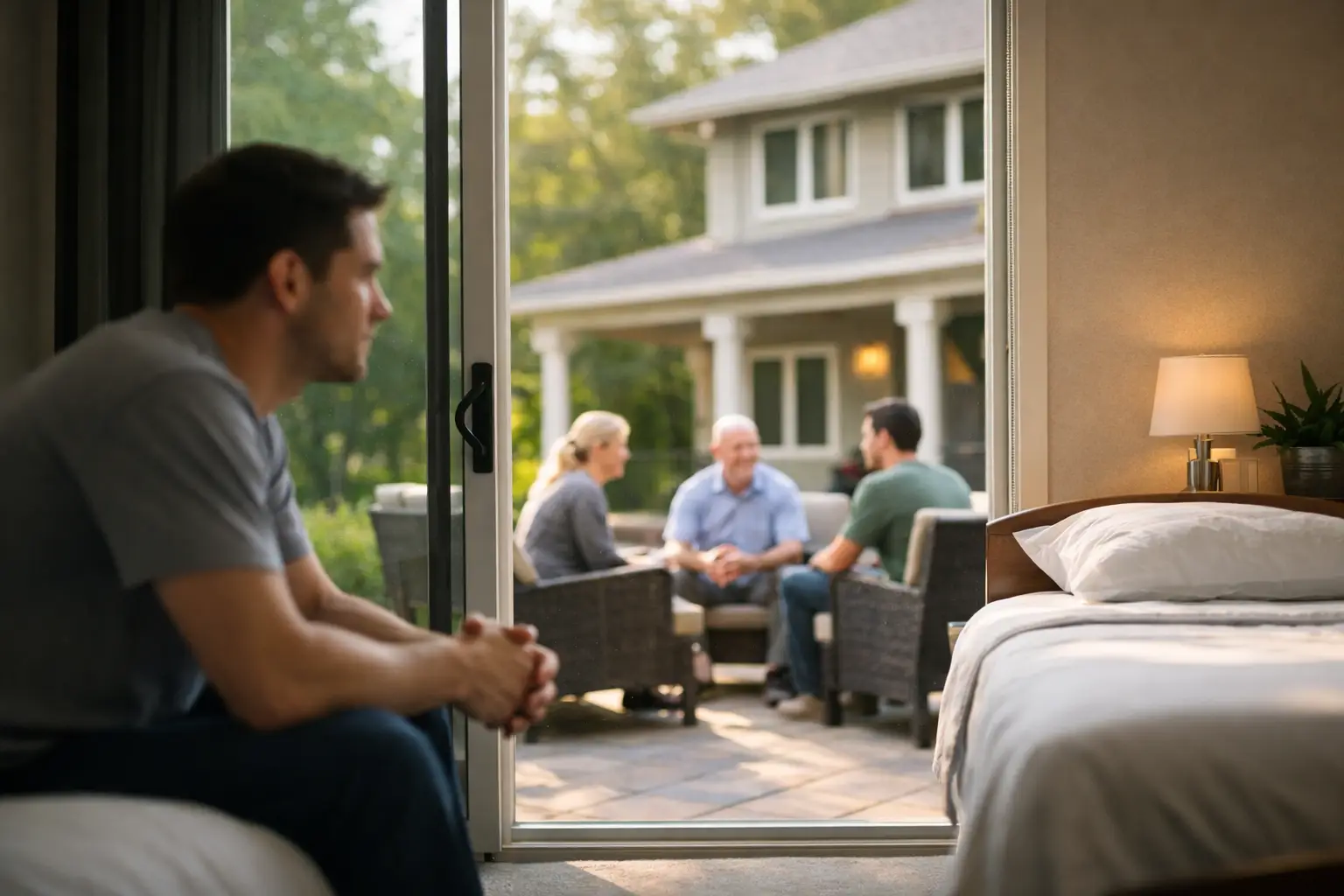
The residential setting matters. Recovery is not happening in the same place where the addiction has been reinforced. Instead, clients are in a safe, monitored environment with clear expectations, professional oversight, and a community that is working toward the same goal. That distance from everyday pressures can make it easier to focus, stabilize, and begin building healthier patterns.
People sometimes use the terms residential treatment, inpatient treatment, and rehab interchangeably. There can be differences depending on the provider and the level of medical care involved, but in general, residential treatment refers to 24/7 care in a structured living environment where recovery work is the central focus.
How residential treatment works day to day
One of the biggest strengths of residential care is consistency. Many people entering treatment have lost routine, sleep patterns, work stability, and healthy coping habits. Treatment helps rebuild those basics because recovery often starts with structure before it starts to feel like freedom.
A typical day in residential addiction treatment includes scheduled wake-up times, meals, individual therapy, group counseling, educational sessions, recovery meetings, and time focused on practical life skills. Some programs also include case management, medication support, mental health services, relapse prevention planning, and peer accountability. The schedule is not there to control people for the sake of control. It is there because predictability and responsibility help restore stability.
Therapy is a core part of the process. Evidence-based approaches such as Cognitive Behavioral Therapy, Dialectical Behavior Therapy, and Motivational Interviewing are often used to help clients understand the thoughts, emotions, and behaviors connected to substance use. For someone dealing with trauma, depression, anxiety, or emotional instability, treatment has to address more than the drinking or drug use alone. If it does not, relapse risk often stays high.
Who needs residential addiction treatment?
Residential care is not necessary for every person with a substance use disorder. Some people do well in outpatient treatment if they have a stable home, lower relapse risk, and enough support to stay accountable. But for others, outpatient care is not enough.
Residential treatment may be appropriate for adults who have repeated relapses, severe alcohol or drug dependence, unsafe living conditions, untreated mental health symptoms, or a history of leaving treatment too early. It can also be the right choice when someone has tried to recover while staying at home and found that daily triggers kept pulling them back.
This level of care is often a good fit when a person needs distance from people, places, and routines tied to substance use. It is also valuable when someone needs time to regain emotional balance, learn coping skills, and practice recovery in a more supervised setting before returning to independent living.
Families should know that needing residential treatment does not mean someone has failed. It usually means the situation has reached a point where more support, not more shame, is required.
What residential treatment can help address
Addiction rarely shows up by itself. Many adults’ entering treatment are also carrying grief, trauma, anxiety, depression, anger, chronic stress, or relationship damage. In some cases, those issues came first and substance use became a way to cope. In other cases, addiction made mental health symptoms worse over time. Usually, both need attention.
That is why strong residential programs look at the whole person. Treatment can help address alcohol addiction, opioid use, stimulant use, methamphetamine addiction, prescription drug misuse, and polysubstance use. It can also support people with co-occurring mental health conditions who need a stable environment while working on emotional regulation, coping strategies, and behavioral change.
This is one reason residential care can be more effective than a short-term fix. Detox may help someone get physically sober, but it does not by itself teach them how to live sober. Residential treatment begins that deeper work.
The role of accountability in recovery
A lot of people hear the word accountability and think punishment. In a healthy treatment environment, accountability means something different. It means showing up, telling the truth, following through, and learning to live by a consistent set of expectations.
Addiction often creates secrecy, impulsivity, and broken routines. Residential treatment counters that with daily responsibility. Clients are expected to participate, respect the structure, and stay engaged in their own recovery plan. That can be uncomfortable at first, especially for someone used to operating in crisis mode. But over time, accountability builds self-respect.
Community also plays a role. Living around others in recovery can reduce isolation and denial. People begin to recognize their own patterns in other people’s stories. They practice communication, boundaries, and mutual support. The environment is not perfect, and residential care is not easy, but growth often happens in that shared daily work.
What to look for in a residential program
Not every residential program offers the same level of care. Some are more clinically intensive. Others focus more on peer support or recovery housing. The right fit depends on the person’s history, mental health needs, relapse pattern, and readiness for change.
A strong program should offer licensed care, individualized treatment planning, and support for co-occurring mental health conditions when needed. It should have clear structure, trained staff, relapse prevention work, and a plan for what happens after the residential stay ends. Families should also ask whether the program helps clients develop life skills, routines, and practical tools for long-term recovery rather than only short-term stabilization.
Length of stay matters too. Some people need only a few weeks to stabilize and transition to the next level of care. Others benefit from a longer residential experience combined with transitional housing or work-focused recovery support. There is no single timeline that fits everyone. What matters is whether the program is building a realistic foundation for the next stage of life.
What happens after residential addiction treatment?
One of the most common fears people have is what comes next. Residential treatment can be life-changing, but returning to the real world too quickly or without support can put progress at risk. Recovery does not end when the residential stay ends. That is often when it needs the most protection.
Good treatment includes discharge planning from the beginning. That may involve outpatient therapy, medication management, support groups, sober living, vocational support, continued mental health care, or transitional housing. The goal is not to keep someone in treatment forever. It is to create enough continuity that they are not dropped back into the same environment with no plan.
This is where a continuum of care becomes especially valuable. A program that combines residential treatment with ongoing recovery support can help clients move forward without losing structure all at once. For many adults, that gradual transition is the difference between early progress and lasting change.
In Phoenix and across Arizona, many individuals and families are looking for more than brief crisis intervention. They want a program that treats addiction seriously, addresses mental health honestly, and supports long-term rebuilding. That is the kind of recovery-focused approach organizations like Step One Behavioral & Residential are designed to provide.
Why this level of care can change the direction of a life
What is residential addiction treatment, at its core? It is a protected space for serious recovery work. It gives people time to get clear, get honest, and start rebuilding with support around them every day.
For someone whose life has become unmanageable, that kind of environment can create a turning point. Not because treatment does the work for them, but because it gives them the structure, tools, and accountability to do work that is hard to sustain alone. If home has become part of the problem, residential treatment can be the place where recovery finally has room to begin. Frequently Asked Questions How long does residential addiction treatment last?
Length of stay varies based on clinical needs, relapse history, and progress in recovery. Some individuals benefit from a few weeks of stabilization, while others may require longer-term residential support.
Is residential treatment the same as inpatient rehab?
The terms are often used interchangeably. Residential treatment generally refers to structured 24-hour care in a live-in recovery environment focused on addiction and behavioral health treatment.
Does residential treatment help with mental health conditions?
Yes. Many residential programs provide support for co-occurring mental health conditions such as anxiety, depression, trauma, and emotional instability alongside substance use treatment.
Who should consider residential addiction treatment?
Residential treatment may benefit individuals with repeated relapse history, severe substance use disorders, unstable living environments, or co-occurring mental health conditions.
What happens after residential treatment ends?
Many individuals continue recovery through outpatient therapy, peer support, sober living, recovery housing, or continued behavioral health services after completing residential treatment. Clinical Leadership
James Mcreary, MS, Clinical Director Step One Behavioral & Residential
James Mcreary helps oversee the clinical direction of the residential treatment program, supporting evidence-based care, accountability-focused recovery programming, and treatment planning for adults facing substance use and co-occurring behavioral health challenges