
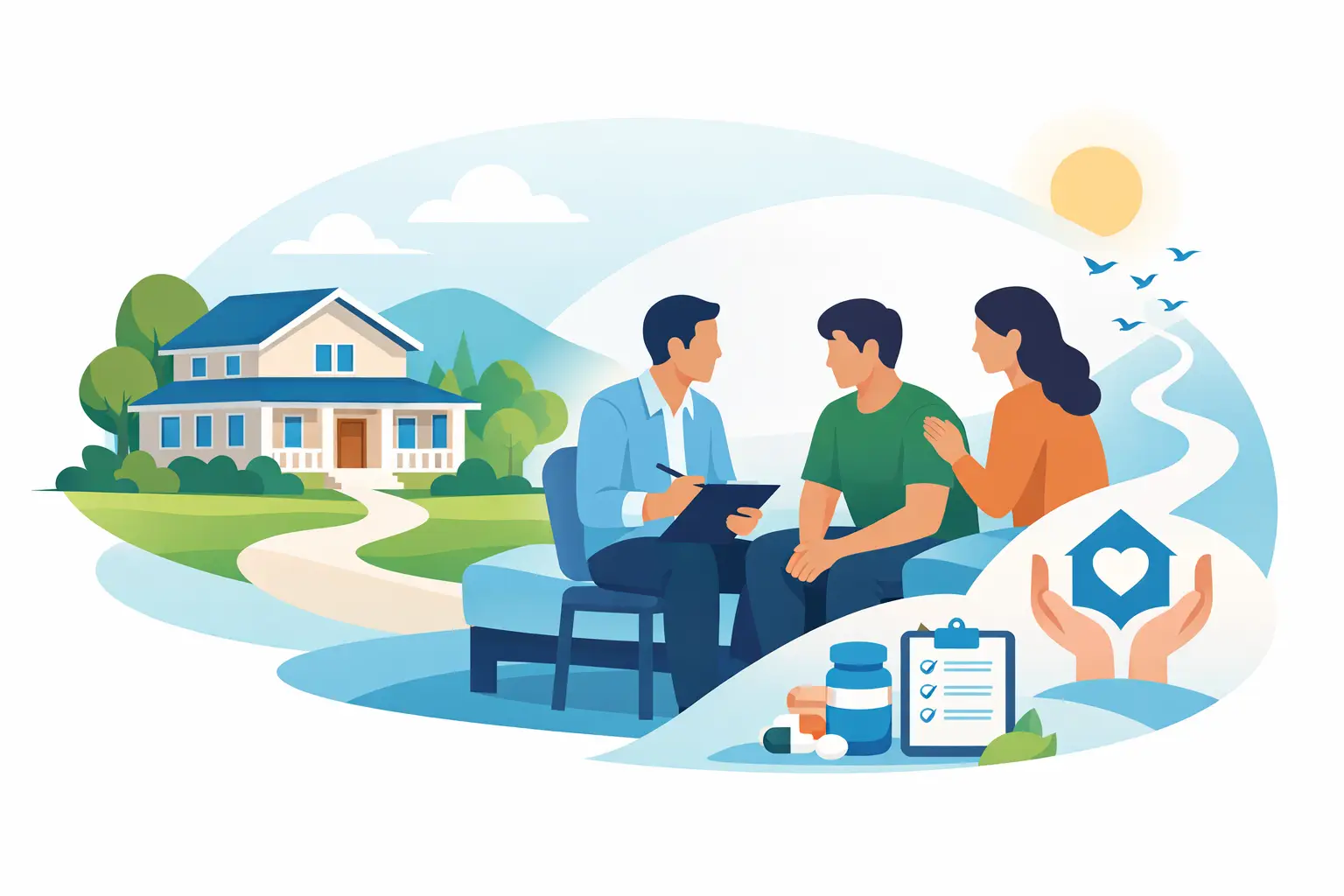
When someone has tried to stop using and keeps ending up back in the same cycle, the question usually changes. It is no longer, “Do they need help?” It becomes, “What kind of help will actually hold?” For many adults, the best residential substance abuse treatment is not the flashiest program or the shortest stay. It is the one that provides real structure, clinical care, accountability, and enough time to begin rebuilding daily life.
Residential treatment matters because addiction rarely exists in isolation. Substance use often develops alongside anxiety, depression, trauma, unstable housing, broken routines, legal stress, family conflict, or repeated relapse after lower levels of care. A person may want sobriety and still struggle to maintain it in the same environment where their substance use took hold. That is where residential care can make the difference. It creates separation from immediate triggers while giving clients a supervised setting to stabilize, engage in therapy, and practice recovery one day at a time.
What the best residential substance abuse treatment actually includes
The phrase sounds simple, but quality varies widely from one program to another. The best residential substance abuse treatment is not defined by marketing language. It is defined by how well a program supports safety, clinical progress, and long-term recovery.
First, there should be a structured living environment. Recovery is hard to build in chaos. A strong residential program includes a consistent daily schedule, clear expectations, staff supervision, and routines that help clients regain stability. That structure is not about punishment. It is about helping people who have often lived in crisis begin to think clearly, sleep regularly, attend treatment consistently, and follow through on responsibilities.
Second, treatment should address more than substance use alone. Many adults entering residential care are also dealing with mood disorders, trauma symptoms, chronic stress, or emotional dysregulation. If a program ignores those issues, relapse risk often remains high. Dual diagnosis support matters because people do not recover in separate pieces. They recover as whole people.
Third, therapy should be evidence-based and individualized. Cognitive Behavioral Therapy, Dialectical Behavior Therapy, Motivational Interviewing, relapse prevention counseling, and practical life skills work all have a place in a strong treatment setting. But no single approach fits every client. Good care adapts to the person, their history, and their stage of recovery.
Why residential treatment works for some people better than outpatient care
Outpatient care can be effective, but it depends heavily on the person’s environment. If someone can return home each night to a stable setting, avoid substance access, manage transportation, and consistently attend sessions, outpatient treatment may be appropriate. But many people seeking help do not have those conditions in place.
Residential care removes some of the barriers that make early recovery fragile. Clients live in a treatment-focused setting with 24/7 support, peer accountability, and a predictable routine. They do not have to make dozens of high-risk decisions every day while trying to stabilize. That reduction in exposure can create the space needed for deeper treatment work.
This is especially important for adults with repeated relapse, severe substance use, co-occurring mental health symptoms, or a home environment that is unsafe or unstable. In those cases, the best level of care is often the one that provides enough structure to interrupt old patterns before they restart.
Signs a program may be the best fit for long-term recovery
Families often feel pressure to act quickly, and that urgency is understandable. Still, choosing a residential program should involve more than finding the first available bed. A better question is whether the program is built for lasting change.
Look for a setting that provides licensed care, clear treatment planning, and active clinical oversight. Ask how therapy is delivered, how mental health conditions are addressed, and what happens when a client struggles behaviorally during treatment. Recovery is not always linear. Programs should be prepared for setbacks without losing accountability.
It also helps to ask what the day actually looks like. A quality residential program should be able to explain its schedule, therapeutic services, house expectations, and recovery supports in concrete terms. If the answer is vague, that is worth noticing. Treatment works best when there is enough structure to support change, not just enough freedom to fill time.
Another key factor is continuity. The strongest programs do not treat discharge as the finish line. They prepare clients for what comes next, whether that means transitional housing, continued therapy, relapse prevention planning, employment support, peer recovery involvement, or ongoing case management. Sobriety becomes more sustainable when the transition out of residential care is intentional.
Best residential substance abuse treatment is about fit, not promises
One of the hardest truths in addiction treatment is that no program can promise an outcome. Recovery requires participation, honesty, and ongoing work from the client. That said, treatment quality still matters a great deal.
Be careful with programs that make recovery sound easy or immediate. Residential treatment can be life-changing, but it is still the beginning of a longer rebuilding process. The right environment helps clients develop insight, emotional regulation, coping tools, and discipline. It does not erase consequences overnight.
The best fit often comes down to whether a person needs a high-accountability environment with daily therapeutic engagement and community support. For someone who has been through detox more than once, dropped out of outpatient treatment, or kept relapsing under stress, a residential setting may offer the level of containment and consistency they have been missing.
In Phoenix and surrounding communities, this can be especially relevant for individuals trying to recover while still surrounded by access, instability, or daily pressures that pull them back into use. Stepping into a supervised residential program gives recovery a real setting in which to begin.
What families should pay attention to
Families are often looking for reassurance, but they also need clarity. A reputable residential provider should be able to explain how it handles supervision, medication management, therapy, relapse risk, and behavioral expectations. It should also speak honestly about what treatment can and cannot do.
A family may hope that once their loved one enters care, the situation will quickly stabilize. Sometimes that happens. Sometimes the early phase is difficult. Clients may resist structure, confront painful emotions, or struggle with responsibility after a long period of substance use. That does not always mean treatment is failing. It may mean the real work has started.
Families should also look for a program that values communication appropriately. Adult clients deserve privacy and dignity, but families benefit when the provider offers education, sets realistic expectations, and helps loved ones understand the recovery process. Addiction affects the whole household. Good treatment recognizes that without losing focus on the client’s clinical needs.
The role of community, discipline, and daily rebuilding
Addiction narrows a person’s world. Recovery has to widen it again. That happens through more than counseling sessions alone. It also happens through routine, peer accountability, skill development, and repeated practice.
In strong residential care, clients learn how to show up for the day even when they feel uncomfortable. They attend groups, meet with clinicians, reflect on behavior patterns, build coping skills, and start taking responsibility in practical ways. Over time, these daily repetitions matter. They create a foundation that many clients have not had in years.
This is one reason community-based residential treatment can be so effective. Clients are not recovering in isolation. They are living alongside others who understand the reality of addiction, denial, relapse fear, and the challenge of starting over. Healthy peer accountability does not replace clinical treatment, but it reinforces it. People often begin to believe change is possible when they see it practiced around them.
At Step One Behavioral & Residential, that combination of licensed care, structured living, and recovery-oriented community reflects what many adults need most – not a temporary pause, but a place to begin living differently.
Choosing care that gives recovery a real chance
If you are searching for the best residential substance abuse treatment, it helps to think beyond amenities and ask a harder question: will this program support real change when motivation fades and the work becomes uncomfortable? That is where quality shows itself.
The best residential treatment gives people a safe place to stabilize, skilled support to address addiction and mental health together, and enough structure to begin rebuilding trust in themselves. It meets hope with discipline. It makes room for setbacks without normalizing them. Most of all, it treats recovery as something that must be lived, not just discussed.
For many people, the turning point is not finding a perfect program. It is finding one that is grounded, accountable, and ready to help them do the daily work of getting their life back.
James Mcreary LPC-S, Clinical Director Step One Behavioral & Residential helps oversee the clinical direction of the residential treatment program, supporting evidence-based care, accountability-focused recovery programming, and treatment planning for adults facing substance use and co-occurring behavioral health challenges.
Disclaimer
This content is intended for educational and informational purposes only and should not be considered medical advice, diagnosis, or treatment recommendations. Treatment needs vary by individual and should be discussed with qualified healthcare professionals.